Nobody hands you a manual for this part.
Everyone prepared you – in some way – for exhaustion. The sleepless nights, the feeding challenges, the sheer physical weight of the first weeks. But nobody quite warned you about the emotional weight. The crying that doesn’t feel like it’s about anything specific. The feeling of being disconnected from your own baby, or from yourself. The sense that you should be happy – and the guilt that comes with not being.
If any of that sounds familiar, the first thing to know is that you are not broken.
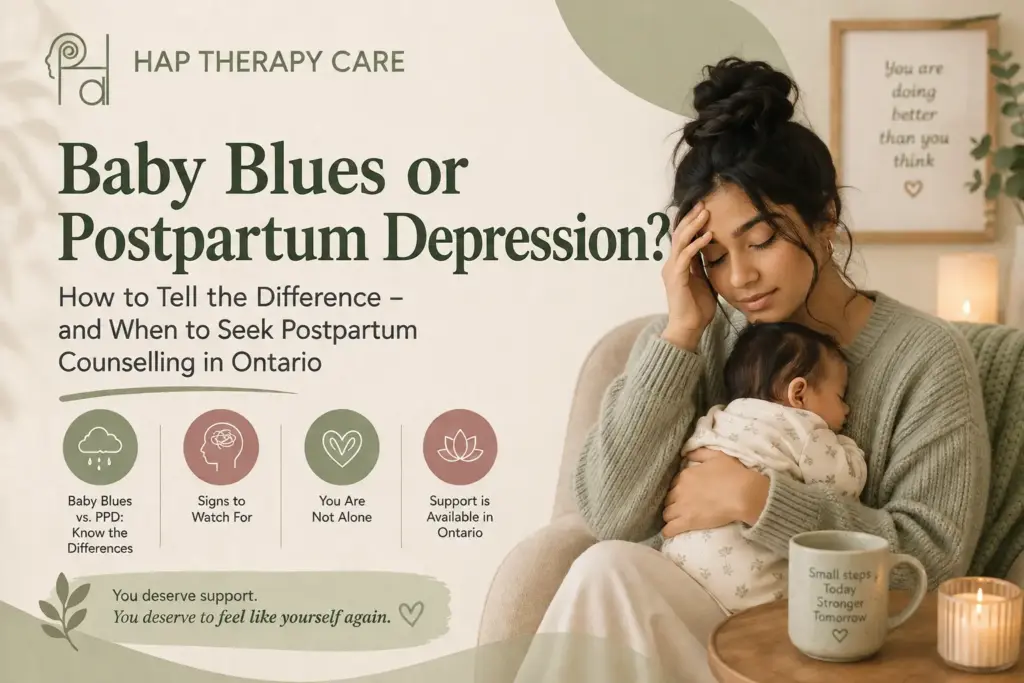
The second thing is that knowing whether what you’re experiencing is the baby blues or something more – a perinatal mood disorder – matters. Because one passes on its own, and one needs support.
What Are the Baby Blues – and Why Do They Happen?
The baby blues are very common. Up to 80 percent of new mothers experience some version of them in the first days after birth.
They typically show up in the first three to five days postpartum. There’s a dramatic hormonal shift happening – estrogen and progesterone, which were extremely high during pregnancy, drop sharply after delivery. Add sleep deprivation and the sheer overwhelm of a newborn, and a period of emotional instability is physiologically expected.
Baby blues tend to look like:
• Unexpected crying – sometimes without knowing why
• Mood swings that shift quickly from okay to not okay
• Anxiety, irritability, or feeling on edge
• Difficulty sleeping even when the baby is asleep
The key feature of baby blues is that they resolve within one to two weeks on their own. If you’re still feeling this way beyond two weeks – or if the feelings are intensifying rather than lifting – that’s when postpartum depression becomes the more likely explanation.
What Postpartum Depression Actually Feels Like
Postpartum depression isn’t always dramatic. It doesn’t always look like not being able to get out of bed. Sometimes it looks like a mother who is getting everything done – but feels completely hollow while doing it.
PPD affects approximately 1 in 5 new mothers in Canada, according to the Canadian Perinatal Mental Health Collaborative. Symptoms can start within the first few weeks after birth, or emerge gradually over the first year.
Signs that suggest postpartum depression rather than baby blues:
• Persistent sadness or emotional numbness that doesn’t lift after two weeks
• Difficulty bonding with your baby – not feeling the connection you expected, or feeling detached
• Intrusive thoughts – unwanted, frightening thoughts about your baby’s safety or your own
• A sense of hopelessness about the future, or feeling like your family would be better off without you
• Physical symptoms – appetite changes, unexplained aches or pain, exhaustion that doesn’t improve with rest
• Withdrawal from your partner, your support system, or things that used to matter to you
It’s worth noting that this kind of struggle can be particularly hard to identify in South Asian families. The cultural expectation to appear grateful and capable – to be seen as managing – means many mothers dismiss their own symptoms for months. The presence of family doesn’t mean the absence of struggle. In fact, sometimes the more surrounded you are, the more isolated you can feel if what you’re experiencing doesn’t have language in your community.
How Long Does Postpartum Depression Last Without Treatment?
This is one of the most searched questions on this topic – and the honest answer is worth knowing before you encounter it from a well-meaning family member telling you it’ll pass.
A study published in JAMA found that depressive symptoms after birth can persist for up to three years in some women – far beyond the first year most people assume marks the outer limit.
That’s not meant to be alarming. It’s meant to be a reason to reach out sooner rather than later.
What Postpartum Counselling in Ontario Involves
The main evidence-based approaches for PPD are cognitive behavioural therapy (CBT), interpersonal therapy (IPT), and – where appropriate – medication in combination with therapy. CBT is often the recommended first-line treatment for mild to moderate cases.
What that looks like in a real session:
• Identifying the thought patterns that are making everything heavier than it needs to be – and learning to work with them differently
• Processing the identity shift that comes with becoming a mother, which is rarely discussed and deeply disorienting
• Working with the grief that can accompany a difficult birth experience or a recovery period that looks nothing like you imagined
• Building a support framework that actually works for your life, your family, and your cultural context
For South Asian mothers specifically, culturally informed support matters. The pressures are specific: the expectation to recover quickly, to be grateful, to not burden a family that has come to help. A therapist who understands these dynamics without needing them explained from scratch makes a meaningful difference.
A Note for International Student Mothers
Postpartum depression in international students and new immigrants carries an additional layer of complexity – navigating a new country, without extended family nearby, with immigration-related stress in the background. If this is your situation, Hap Therapy Care also offers counselling for international students in Ontario that acknowledges both the postpartum experience and the immigration context together.
When to Seek Help: A Simple Test
Ask yourself three things:
• Has this feeling persisted for more than two weeks?
• Is it affecting your ability to care for yourself or your baby?
• Has it not improved – or has it gotten worse?
If you answered yes to any of these, support is worth seeking. You don’t need to wait until things are worse. You don’t need a formal diagnosis. Reaching out is itself the first step.
At Hap Therapy Care, postpartum counselling in Ontario is offered virtually, in Tamil and English, with a therapist who understands the specific experience of South Asian mothers. Book your free 15-minute consultation here.
Frequently Asked Questions About Postpartum Depression and Counselling in Ontario
Is postpartum depression covered by OHIP in Ontario?
OHIP does not cover private psychotherapy sessions. However, many employer extended health benefit plans cover registered psychotherapy. Check your plan for ‘registered psychotherapist’ or ‘psychotherapy.’ Your family doctor or midwife can also refer you to publicly funded options.
Can postpartum depression start months after birth?
Yes. Symptoms can begin at any point within the first year after birth. Some mothers notice them around six weeks after delivery, others around the six-month mark – particularly as the initial support from family begins to fade.
Can fathers or non-birthing partners experience postpartum depression?
Yes. Research indicates approximately 1 in 10 fathers or non-birthing partners experience postpartum depression. The hormonal component is different, but the identity shift and weight of a new role affect both parents. Counselling is available and effective for non-birthing partners too.
What’s the difference between postpartum depression and postpartum anxiety?
Anxiety after birth tends to centre on intrusive worry, hypervigilance, and racing thoughts. PPD is more characterized by low mood, numbness, and withdrawal. Many mothers experience both simultaneously. Both respond well to therapy.