

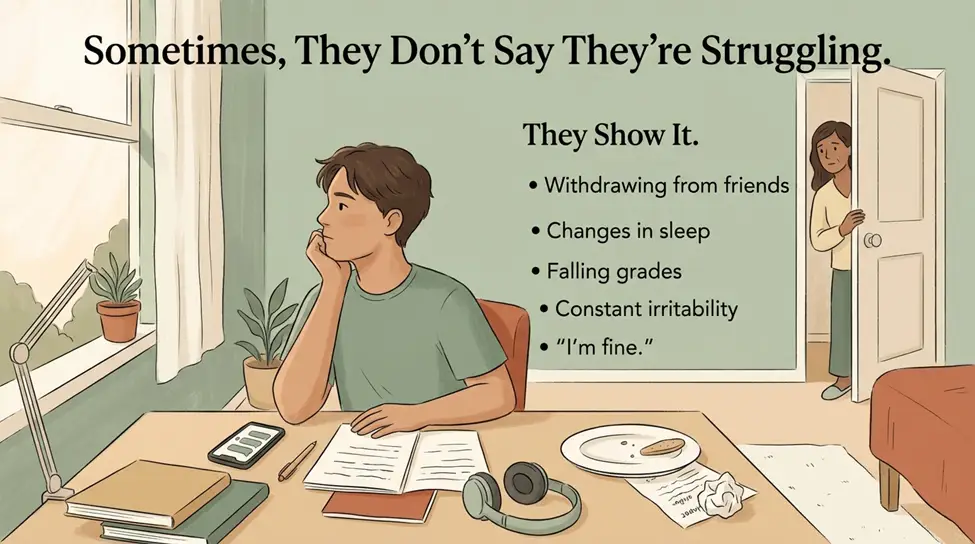
Your teen says “I’m fine.” You know they aren’t. You think it is the door that stays closed longer than it used to, the grades that slipped without explanation, or the flatness in their voice at dinner. You are not imagining it, and looking this up nervously at midnight does not make you an overreacting parent.
This guide is written for the parent, not the teen, because you’re usually the one doing the research, the worrying, and eventually the booking.
Here is what this kind of support actually involves, what it costs, and how to tell if it is time for a conversation.
What Is Teen Counselling?
Teen counselling is psychotherapy built around the emotional and developmental pressures of adolescence, a confidential space without the parents, school people, and community, where a teenager can speak without editing themselves.
In Ontario, it is typically delivered by a Registered Psychotherapist (RP), Registered Social Worker (RSW), or psychologist. Look for CRPO registration (College of Registered Psychotherapists of Ontario); which tells you that the therapist is regulated and answerable to a real professional standard.
Hareesma Amutha Venkatesan, who leads Hap Therapy Care, is CRPO #17974 and holds an M.A. in Counselling Psychology from Yorkville University.
Sessions address anxiety, ADHD and focus struggles, academic burnout, family conflict, and, for South Asian and Tamil teens, the extra burden of navigating two cultures at once.
How Do I Know If My Teen Needs Counselling?
Do not wait for a crisis.
Did you know? CAMH estimates about 1 in 5 Canadian youth deals with a mental health challenge in any given year, and most of it goes unaddressed because nobody names it at the beginning.
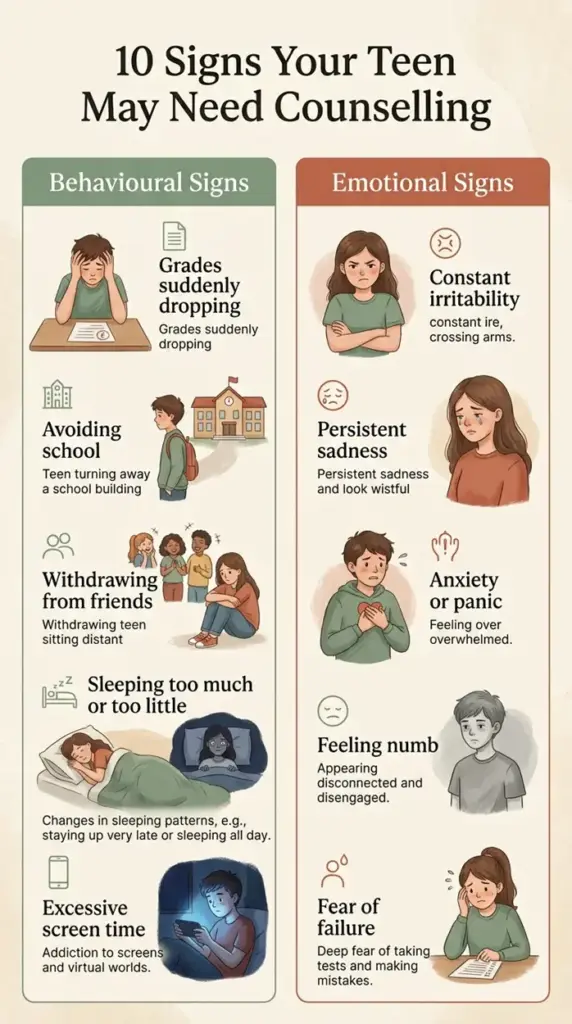
Here are ten signs worth watching for.
Behavioural Signs
- Grades dropping without a clear cause
- Skipping school, or finding excuses to avoid it
- Sleep, appetite, or energy shifting for no obvious reason
- Screen time that looks like distracting oneself, not relaxing
- Pulling away from friends, activities, or family meals they used to enjoy
Emotional Signs
- Irritability or extreme anger greater than the situation calls for
- A “I don’t care” mood that sticks around most of the time
- Anxiety showing up in the body as stomach aches, headaches, restlessness
- Talk of feeling like a burden, or just feeling disinterested
- Perfectionism curdling into fear of failing, instead of being a drive to do well
When Is It Urgent?
If your teen avoids people and situations, not wanting to be in the moment, or hurting themselves, this moves past a “let’s keep an eye on it” situation. Call Kids Help Phone at 1-800-668-6868, available 24/7, or get to your nearest emergency department. Book a therapy session too, but don’t let it be the only safety net.
As a practical rule, if any of the signs above have lasted more than two or three weeks and are affecting how your teen functions at home, at school, or with friends, it is worth reaching out. Do not think you are overreacting or blowing this out of proportion because getting support early tends to change how things go.
How Does Teen Counselling Actually Work?
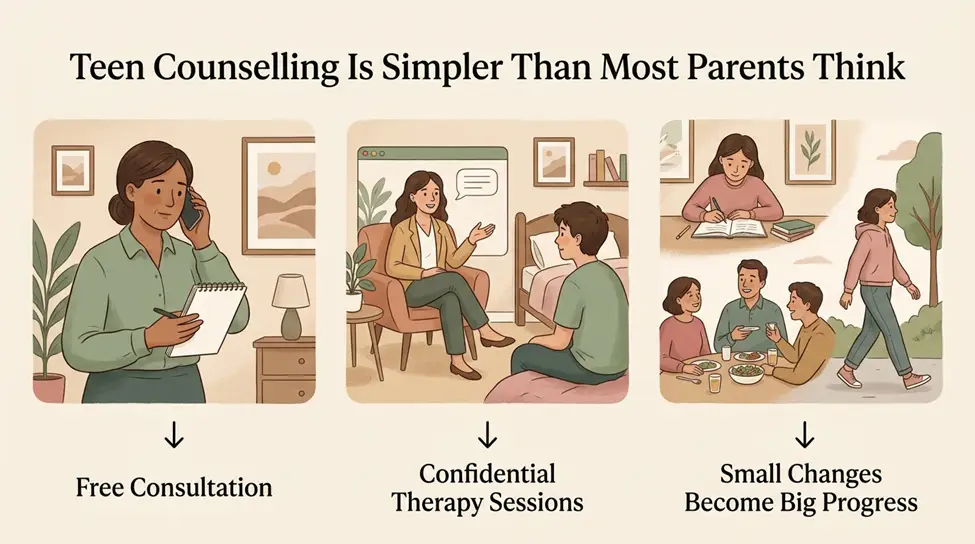
At Hap Therapy Care, sessions run on a simple structure: a short intro call, an intake conversation, then ongoing 50-minute sessions built around whatever your teen is actually dealing with, which is definitely not a generic script.
What Happens in the First Session
There is no single right way for a teen to start. A good therapist will not hand them a worksheet in the first session and wait for answers; instead, they will let the teen lead, ask open questions, and wait for thet trust to build before digging into anything heavy.
At Hap Therapy Care, the first session is really just about your teen sharing whatever feels safe to share that day, without the need to try to be understood or figure out a solution.
Is the Session Only With My Teen, or Am I in the Room?
This is the question almost every parent asks, and the honest answer is that sessions are confidential and teen-led.
In Ontario, adolescents aged 12 and above who are considered capable of understanding the decision can generally consent to their own mental health treatment, and they are entitled to complete confidentiality under PHIPA (the Personal Health Information Protection Act).
That doesn’t mean you will be cut out entirely. Most therapists, Hareesma included, will be sharing regular progress updates without breaking confidentiality, and may suggest an occasional parent check-in with the teen’s consent. The only legal exception is immediate risk of serious harm, explained upfront. So, nothing discussed in session makes it to the school, extended family, or the wider community.
Virtual vs In-Person for Teens
Online therapy is as effective and simple as in-person therapy for teenagers, and many teens find it easier to open up from their own room than an unfamiliar waiting area.
Hap Therapy Care runs virtual-first for exactly this reason: secure video or phone sessions, anywhere in Ontario, no commute, no waiting room.
How Much Does Teen Counselling Cost in Ontario in 2026?
Here is what sessions actually cost in Ontario. A few things worth knowing:
Insurance: Most extended health benefit plans cover sessions with a Registered Psychotherapist, fully or partially, so it is worth confirming your plan first. A detailed receipt will be provided for reimbursement either way.
No referral, no hidden waitlist: Private therapy for teens usually starts within days.
Public system wait times: Publicly funded child and youth mental health services in Ontario can mean waiting times from a few weeks to well over a year, depending on region and severity, according to Children’s Mental Health Ontario. That is a big part of why many families start privately while staying on a public list too, or go private instead.
Teen Counselling for South Asian Families: Why Cultural Fit Matters
There is a kind of tiredness that comes from living between two worlds: Tamil or another South Asian language at home, English everywhere else, one set of expectations from family and a different one from school and friends.
For a lot of South Asian teens, therapy is not just about anxiety or grades but about academic performance tied up in family honour, community stigma that makes admitting challenge feel shameful, and the unsaid pressure of being the kid who’s “supposed to have it easier” than their parents did.
“We Don’t Do Therapy”: Handling Stigma at Home
If your family’s first instinct is to encourage your teen to “stay strong,” focus on school, pray, or give it some time, you’re not alone. Many South Asian parents support their children in the ways they know best, often from a place of love and protection. Therapy isn’t about replacing a parent’s guidance or saying anyone has done something wrong. It’s simply giving your teen another safe space to talk openly, without fear of judgment, while learning practical coping skills, trying new activities, and exploring different ways of understanding their thoughts, emotions, and challenges. Sometimes, having someone outside the family can help a teen see things from a new perspective and build the confidence to navigate life’s ups and downs.
How to Bring It Up With Your Teen Without a Fight
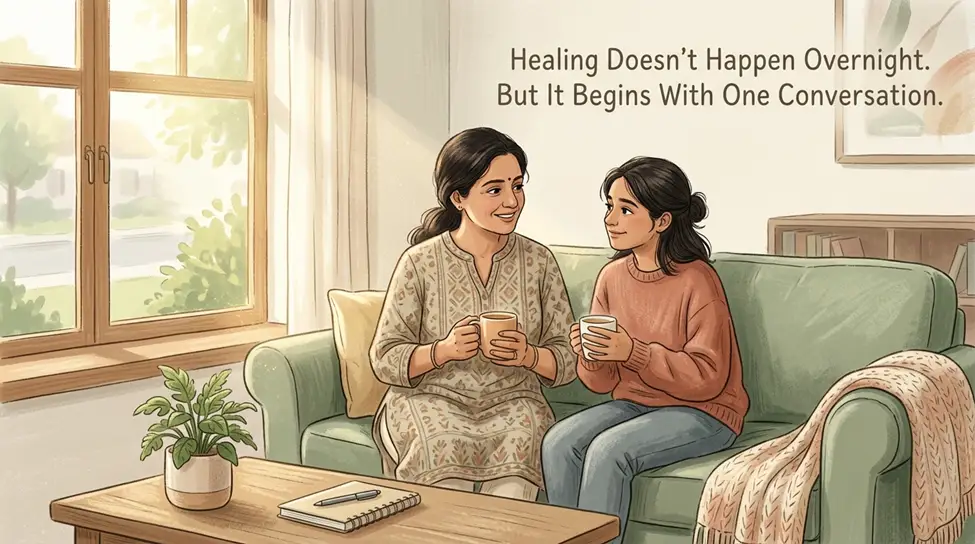
Bringing up therapy with a teenager can feel like defusing a bomb. Think of these less as scripts and more as a starting point, adjust the wording until it sounds like you.
If you want a low-pressure opener, try: “I have noticed you look pretty tired and quiet lately. I am not trying to fix you; I just thought talking to someone outside the family might help.”
To normalize it, you could add: “Lots of people your age share with a counsellor, like how people see a doctor for a sprained ankle. It does not mean something is wrong with you.”
Giving them a real choice matters too: “Would you be open to just one call, no commitment? If you don’t feel it is for you, we don’t have to keep going.”
On confidential conversations: “What you say stays between you and the therapist. Even I won’t be told the details. I just want you to have somewhere to talk that isn’t me.”
And on cultural fit: “She’s Tamil-speaking and gets what it’s like to grow up between two cultures. You won’t have to explain the basics first.”
FAQs Regarding Teen Counselling in Ontario
Does OHIP cover teen counselling?
No, OHIP doesn’t cover a Registered Psychotherapist in private practice. A lot of employer health benefit plans do though, partially or fully, so check yours before booking.
How long until we see change?
Depends on the family. Many notice small shifts, better sleep, more openness at home, less avoidance, within four to six sessions. Deeper issues take longer and move at the teen’s own pace.
Can my teen refuse?
Yes, and pushing too hard usually backfires. Framing that first session as low-stakes and no-commitment tends to work better than an ultimatum.
What if my teen doesn’t talk?
Totally normal for a first session. Experienced teen therapists don’t force it; silence and “I don’t know” are normal starting points, and trust tends to build over two or three sessions, not one.
Is online counselling effective for teens?
Yes. It holds up just as well as in-person care for adolescents, and a lot of teens find it easier to be honest from their own space rather than an office.
Your Teen Doesn’t Have to Keep Carrying This Alone
If you have made it this far, some part of you has probably already decided something needs to change. That instinct is worth trusting.
Hap Therapy Care offers online teen counselling in Ontario for ages 13-19, in Tamil and English, with evening and Saturday availability so sessions fit around school instead of competing with it. No referral needed, no long waitlist, and everything discussed stays confidential under PHIPA.
The first step is a free 15-minute consultation, for you, your teen, or both, to see if it feels right. From there, take a look at the full teen services page or the booking and pricing page.
If your family’s also dealing with ADHD-related struggles, or you’ve got an older teen heading to university, Hap Therapy Care’s ADHD support and counselling for international students pages are worth a look too.
Questions before booking? Call +1 (437) 455-5646 or email hareesma@haptherapycare.com.