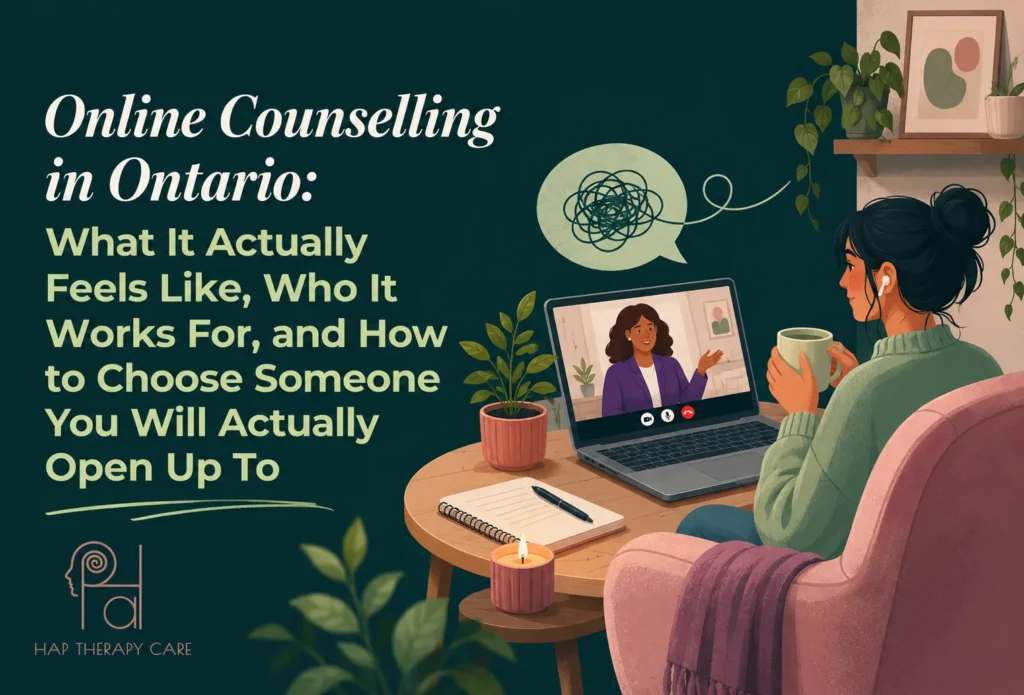
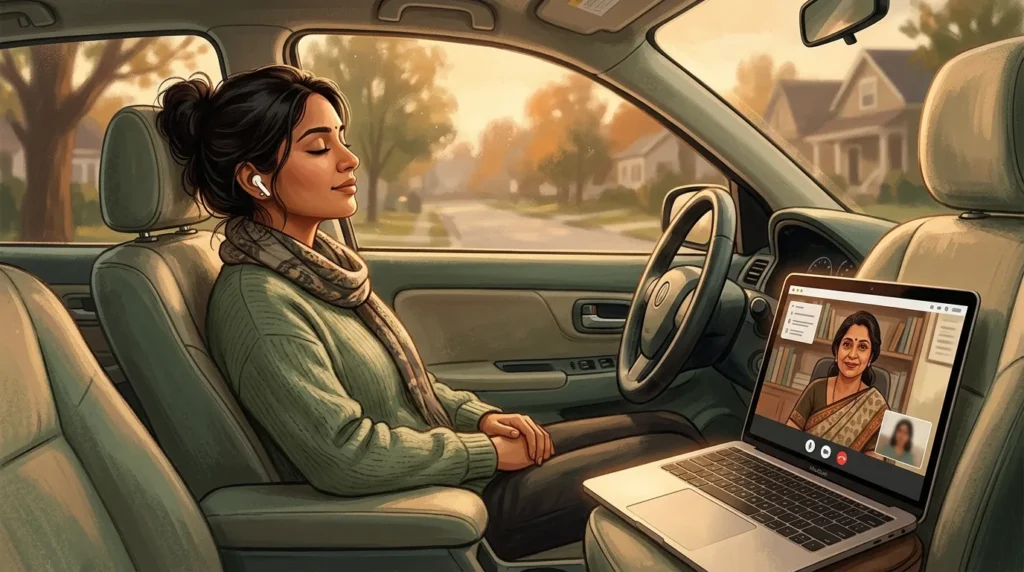
Her first session happened from the front seat of her car.
It was a Wednesday lunch break, office behind her, kids at school, fifty minutes of quiet she had protected like it was precious. She plugged in her earbuds, opened the video link, and for the first time in months, someone asked her how she was actually doing. Not just for courtesy, but really asked.
She cried a little. Her therapist listened patiently. At the end of the session, she felt a bit clearer and lighter.
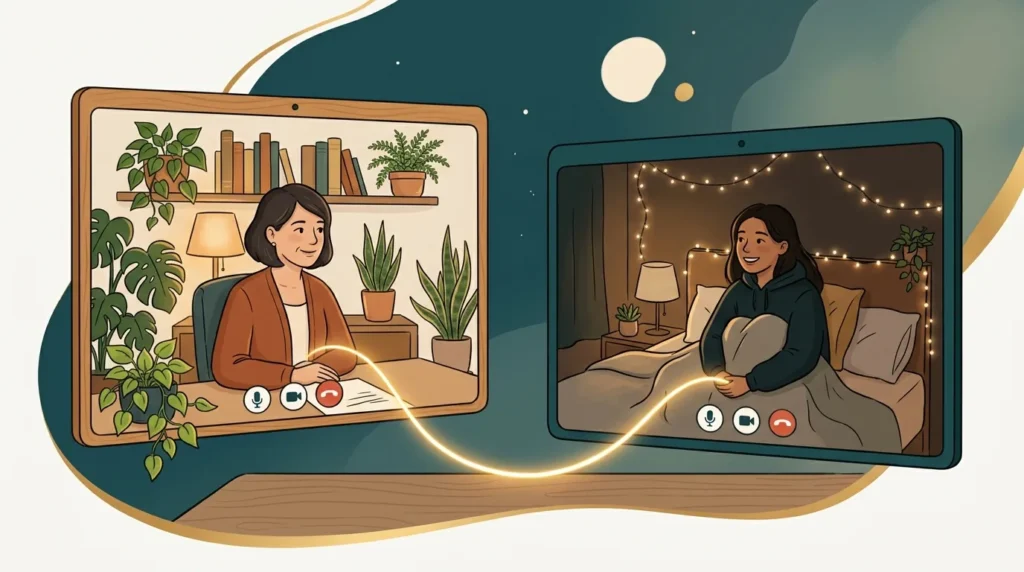
This is what online counselling can look like, not clinical, but genuinely woven into the life you already have. For many people across Ontario, it is the long-planned therapy that finally happened, not because it replaced something better, but because it removed every barrier that had been in the way.
If you are wondering whether it is real, whether it works, & whether it could work for you, this article is for you.
Is Online Counselling Actually as Effective as In-Person Therapy?
Yes, for the vast majority of concerns, online counselling is as effective as in-person therapy.
Did You Know?
A landmark meta-analysis published in the Journal of Psychological Disorders found that internet-based cognitive behavioural therapy was as effective as face-to-face therapy for conditions including panic disorder, depression, and social anxiety, with high patient satisfaction rates across the board.
For issues like identity struggles, anxiety, depression, relationship stress, life transitions, postpartum emotional changes, & burnout, the research consistently shows comparable outcomes between virtual & in-person formats. The therapeutic relationship, which is the quality of connection and trust between you and your therapist, is what drives outcomes, and that relationship builds just as powerfully through a screen.
Are there exceptions?
Yes. Individuals in acute mental health crises, certain complex trauma presentations requiring somatic or body-based approaches, or people who find screen-based communication truly difficult may need a different format. A good therapist will tell you this plainly if it will apply to you.
Ask yourself: Is it logistics that stopped you from starting therapy? Distance, scheduling, the cost involved, or the anxiety of walking into an unfamiliar office, have any of these kept you from making the call?
If so, online counselling may be the format that removes the barrier between you and the support you have already decided you need.
For Whom Does Online Counselling in Ontario Work Well?
Here is who tends to find online counselling particularly well-suited to their circumstances:
| Who | Why Online Counselling Fits |
|---|---|
| People in smaller Ontario cities or rural areas | Limited access to local therapists with specific expertise; online expands your options significantly |
| South Asian and immigrant communities | Cultural fluency matters and the right therapist may not be available locally |
| New parents navigating postpartum mental health | No childcare needed; sessions can happen during nap time or after bedtime |
| International students with irregular schedules | Evening and weekend availability accommodates study and work commitments |
| Young professionals with unpredictable work hours | Sessions can be booked from the office or home or a quiet private space with a secure network connection |
| Teens navigating academic or identity stress | Familiar with digital environments; often more at ease than in a clinical office |
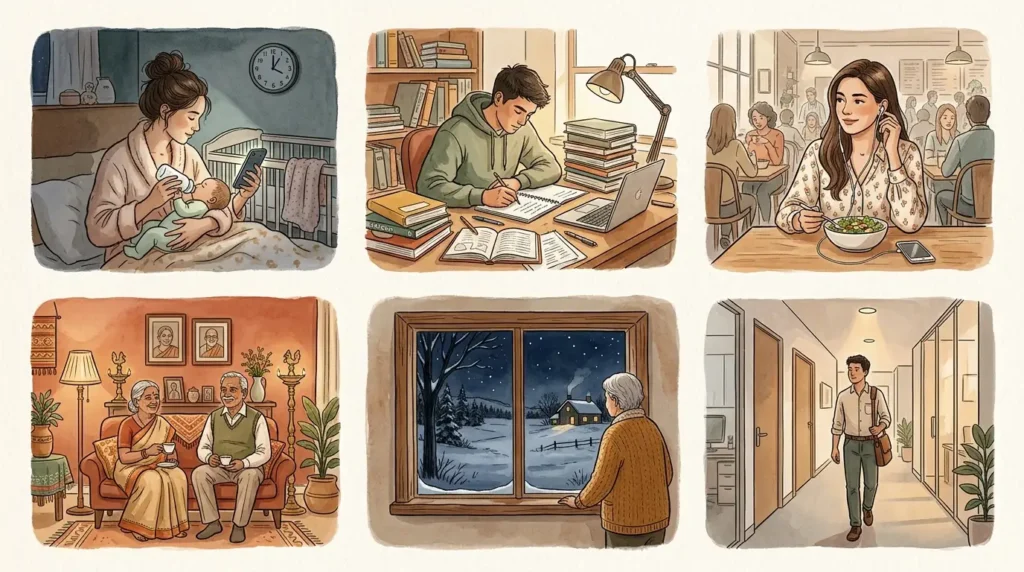
For South Asian communities, including Tamil-speaking families, new immigrants, and the broader Indo-Canadian community, the ability to access a therapist with genuine cultural fluency is not a preference, but a clinical necessity. When your therapist understands the weight of family values, the loneliness of immigration, or the silence that surrounds mental health in collectivist cultures, you do not have to spend your sessions educating them. You can simply begin.
Did You Know?
According to Statistics Canada, immigrants to Canada report significantly higher rates of unmet mental health needs compared to Canadian-born individuals, yet are less likely to access formal mental health services. Cultural and linguistic barriers are among the top reasons cited.
How Does a First Online Counselling Session Look Like
The unknown is often the most intimidating part. So here is what to expect.
Before the session: You will receive a secure video link; platforms used by registered therapists are encrypted and PHIPA-compliant. Find a private and quiet space
The first 10–15 minutes: Your therapist will introduce themselves, explain confidentiality, and check in about how you are feeling about being there. It isn’t an interrogation, but the beginning of a conversation.
The middle of the session: You will be asked what brought you in, not every detail, just what feels most present for you right now, without an expectation for you to unpack everything in session one.
Consequent/Closing sessions: Your therapist will summarise what you have shared, check in about how you are feeling, and explain briefly about what working together might look like, helping you understand what comes next.
Between sessions, some therapists also share simple reflection prompts or exercises, things to notice, not homework to stress about, but activities to make the sessions more interactive.
How to Choose The Right Online Therapist in Ontario With Whom You Can Open Up
Finding the right therapist is not about finding the most credentialed one, but about finding someone whose approach, background, and way of showing up make you feel safe enough to be honest.
Here is a practical framework:
- Check registration. In Ontario, looking for therapists registered with the CPO (College of Psychologists of Ontario), CRPO (College of Registered Psychotherapists of Ontario), or OCSWSSW means your therapist is accountable to a regulatory body & meets professional standards.
- Look for explicit experience with your specific concerns. Anxiety is not the same as postpartum anxiety. Teen counselling is not the same as adult therapy. The therapist’s bio should reflect familiarity with what you are carrying, not just a general list.
- Read bios for language that reflects your worldview. A therapist who mentions identity, family expectations, cultural adjustment, immigration, or community pressure in their own words, not just “diverse populations”, is signalling something meaningful about how they work.
- Use the discovery call. Most therapists offer a free 15-minute call before you commit to anything. This is your interview as much as theirs. Notice how you feel, do they listen?, do they ask the right questions?, and does it feel possible?
For South Asian and Tamil-speaking clients in Ontario: look for a therapist who names cultural competency explicitly and meaningfully.
At Hap Therapy Care, Hareesma Amutha Venkatesan is herself an Indo-Canadian who immigrated from India, bringing not just training, but a lived understanding of what it feels like to navigate identity, belonging, & anxiety in a new country. That is the kind of fit that changes what is possible in therapy.
Common Concerns About Online Counselling Answered Honestly
Are the sessions confidential?
Yes. Regulated therapists in Ontario are legally and ethically bound to confidentiality and conduct sessions on encrypted, PHIPA-compliant platforms. Your information is not shared with your insurance company, your employer, or anyone else without your explicit consent (with very narrow exceptions, such as imminent risk of self-harm; your therapist will explain these clearly).
Will my employer or family find out?
No. Therapy records are not accessible to your employer. If you use insurance benefits, your insurer typically receives only the minimum information needed for billing, not session content.
What if I break down on camera?
This is fine, it happens, and your therapist is prepared for it. A skilled therapist will meet them with the same care they would in person.
What if I don’t have a private space at home?
No problem at all. Your therapist isn’t judging your setting. You just need a quiet and private space, which can be even in your car, with a secure network connection.
Do I need a referral from my GP?
No. In Ontario, you can access a registered psychotherapist directly, without a doctor’s referral. You can book a discovery call today.
Ready to Find Out If This Fits?
The first step isn’t a commitment. It is a conversation.
Hap Therapy Care offers a free 15-minute discovery call, available evenings and weekends, to give you a stress-free space to ask questions, share a little of what is going on, and see whether working together will feel right. Sessions are online, available to Indo-Canadian adults, teens, and new parents across Ontario, and offered in both Tamil and English.
Book your free 15-minute consultation → haptherapycare.janeapp.com
Haptherapy Care offers culturally responsive online counselling in Ontario for individuals, teens, and new mothers. Services include postpartum counselling, counselling for international students, and individual therapy for anxiety, burnout, ADHD, and life transitions.