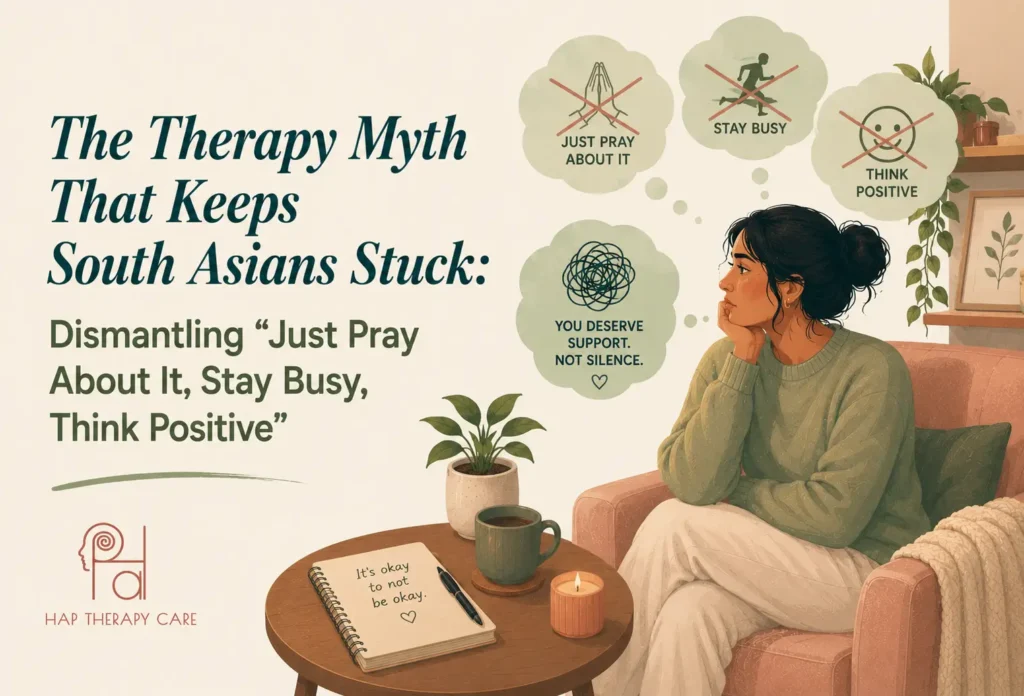
The Script You Grew Up With
You are sitting with a thought for the first time – maybe therapy is actually worth trying, for someone like you. And before the thought finishes, a voice answers it. Maybe it is your mother’s voice, or a relative’s. Maybe it is your own, trained by years of hearing the same three lines: just pray about it, stay busy, you will feel better, or think positive, others have it so much worse.
Research shows South Asian Canadians experiencing major depression are 85% less likely to seek treatment than the general population – and the reasons are rarely about access. They are about which scripts we were handed before we even knew we needed help.
If you recognised those three sentences immediately, this article is written for you.
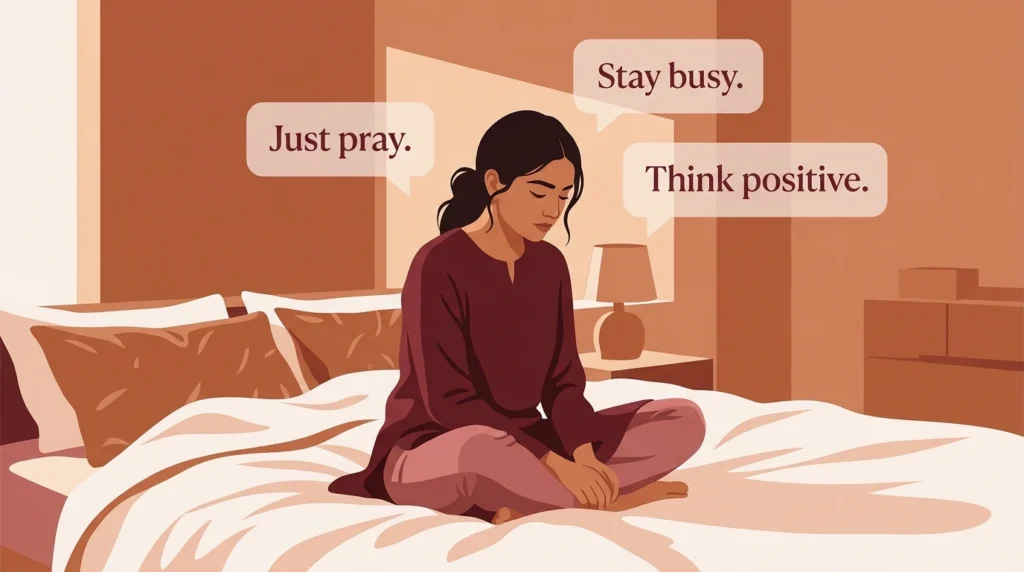
Why Don’t South Asians Seek Therapy More Often, Even When Struggling?
Research points to one consistent answer: not a lack of need, but stigma and inherited scripts that frame emotional struggle as a private failing rather than as a wellness issue.
Let us look at each one honestly.
Myth 1: “Just Pray About It” – Why Faith Alone Isn’t Enough for Clinical Anxiety
Faith deserves respect here, not dismissal. For many South Asian people – whether Hindu, Christian, Muslim, or Sikh – prayer and community offer real psychological steadiness. That value is not in question.
The myth is not prayer. It is the idea that prayer alone is enough to deal with clinical anxiety, depression, or trauma.
Therapy and faith are not competitors. Many clients hold both at once, often stronger together than either alone. In reality, people of deep faith see doctors when unwell without it meaning anything about their belief. The mind deserves the same logic.
Myth 2: “Stay Busy” – The Real Cost to South Asian Mental Health
This one comes from somewhere real. Earlier generations survived partition, migration, and genuine hardship by building a life from nothing through sheer forward motion. So busyness worked – up to a point.
Past that point, it stops being resilience and becomes avoidance. Avoidance does not make anxiety or grief disappear – it just delays where they show up. Often, it is the body that takes the hit: insomnia, headaches, a stomach that is never settled, a sudden wall of burnout that seems to come out of nowhere.
This pattern shows up often among high-achieving South Asian professionals – the so-called “model minority” who appear fine on the outside, because appearing fine has been the unspoken job description for generations.
Myth 3: “Think Positive” – When Gratitude Becomes a Measuring Stick
This myth is wrapped around something true. Gratitude has real value. But “think positive” often becomes a way of measuring your pain against someone else’s. Your parents sacrificed more – so what right do you have to struggle?
Suffering is not a competition. Someone else’s hardship does not cancel out yours. Feeling overwhelmed while also feeling grateful are not contradictions – they can coexist constantly.
| Quick Reflection Have you ever minimised something difficult by telling yourself, “others have it worse”?Have you stayed busy specifically to avoid sitting with a feeling?If either answer is yes, that is not a weakness. That is the script our systems were handed, often passed down as quiet intergenerational patterning. |
What Is Actually Underneath These Myths
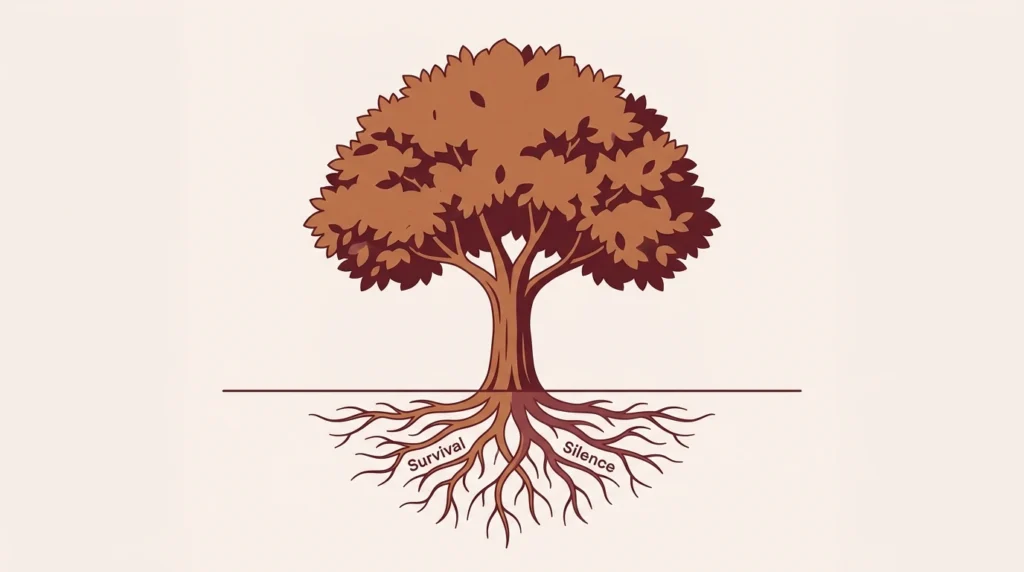
All three come from the same place: they protected earlier generations and preserved family reputation by keeping the struggle private.
Understanding this does not excuse the cost – but it explains why these scripts are so hard to put down.
| Did You Know? A peer-reviewed Canadian study found South Asian Canadians with major depression are 85% less likely to seek treatment than their white counterparts (Mahmood et al., Canadian Journal of Psychiatry, 2024)The same research found South Asian Canadians report the highest unmet mental health care needs of any ethno-cultural group studied, at 48%Statistics Canada survey data shows lower reported rates among South Asian communities, which likely reflects stigma rather than lower actual needTherapist-client confidentiality in Ontario is legally protected – your family is never contacted without your consent |
What Culturally Informed Therapy Actually Looks Like
A therapist who already understands South Asian family dynamics will not need joint-family obligations or immigration grief explained from the very beginning. That context – covered further on our therapy for South Asian clients page – is already understood, so the real work can start sooner.
A first session has no pressure to share everything at once. Common topics like family obligation, identity conflict, career pressure, and relationship dynamics are discussed with absolute confidentiality under Ontario law.
At Hap Therapy Care, this is not just theoretical. As an Indo-Canadian therapist who immigrated from India, Hareesma has lived the tension between two distinct cultures, and the guilt of struggling when family has sacrificed so much to get here. That is the understanding many people are searching for when they look for a South Asian therapist in Ontario – someone who gets the tension without needing it explained. The same applies for Tamil-speaking families who want their parents or grandparents to be heard in the language they are most at ease in.
A Note for International Students
If you are a South Asian international student in cities like Toronto, Waterloo, or Ottawa, these myths hit differently.
You are far from your usual support system, navigating a culture that does not map onto home, under financial and academic pressure, and often lonelier than you would like to admit.
Counselling for international students exists precisely for this. Dedicated support is built around exactly this experience – reaching out is not a failure to cope independently.
You Have Already Done the Hardest Part
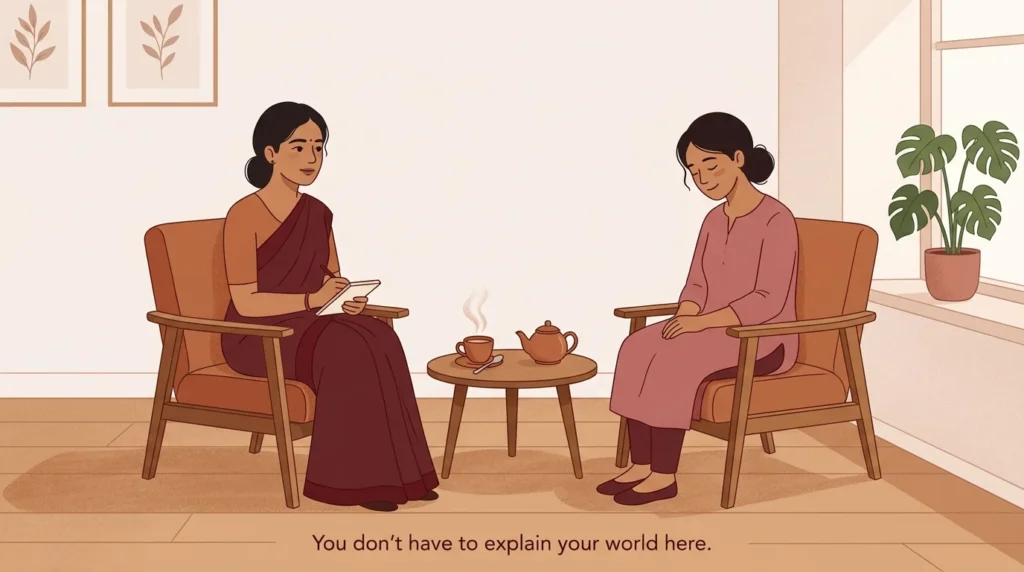
For most South Asian readers, the hardest part is not finding a therapist. It is admitting, even just to yourself, that something needs help and guidance. If you have read this far, you have already done that.
Whether you are in Toronto, Mississauga, Brampton, Scarborough, or anywhere else across Ontario, Hap Therapy Care offers a free 15-minute discovery call through our online counselling booking page – fully confidential and without any referral.
Hareesma, an Indo-Canadian therapist who immigrated from India, brings that lived experience of navigating two cultures into every session – meaning you will not have to explain your world from the very beginning.
Learn more on her therapist page, or simply book a conversation to see if it feels right.
| About the Therapist Hareesma is a Registered Psychotherapist (Qualifying) with the CRPO and a CCPA member, offering therapy for South Asian families across Ontario from lived, first-generation immigrant experience. |
Frequently Asked Questions
Is therapy culturally appropriate for South Asians?
Yes. Culturally informed therapy for South Asian clients holds family dynamics and identity complexity without needing that context explained – which matters, given South Asian Canadians are 85% less likely to seek treatment for depression than the general population.
Will my family find out if I see a therapist in Ontario?
No. Confidentiality is legally protected and never shared with family or community without your written consent.
Can I do online counselling in Ontario without being seen entering a clinic?
Yes. Online counselling is fully available and equally effective for anxiety, depression, and identity concerns.
Do I need a doctor’s referral to see a therapist in Ontario?
No. You can self-refer directly to a registered therapist.
What if I’m not sure my problem is “serious enough” for therapy?
It is. Therapy is not only for crisis – much of the valuable work happens before a breaking point, addressing patterns built up over years.